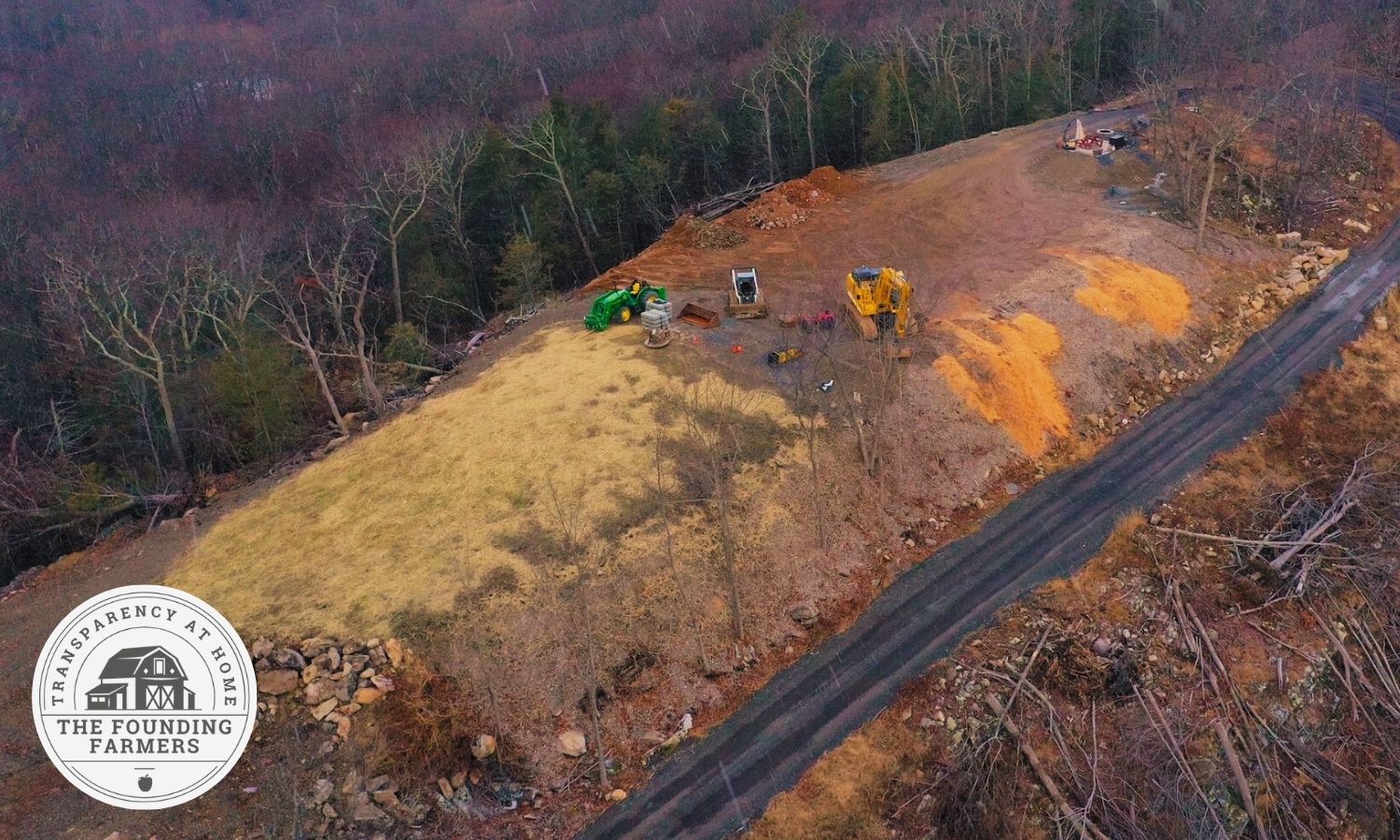
On January 8, 2026, the Town of Marlborough Zoning Board of Appeals denied an appeal by Steven Santini to construct a single-family residence within the Town’s Ridgeline Protection Area, ending a year-long dispute over the interpretation and enforcement of Marlborough’s ridgeline law.
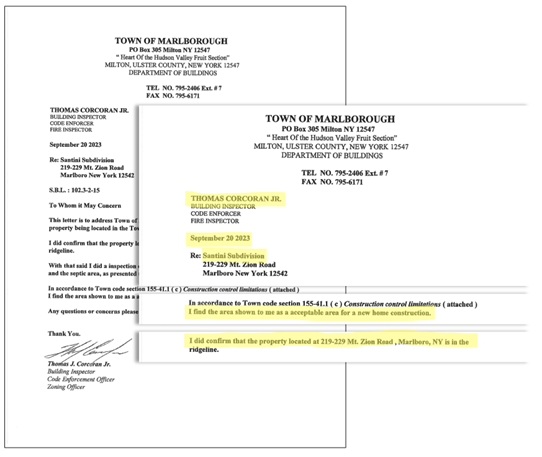
The decision followed years of public concern over the handling of the application. On September 20, 2023, Code Enforcement Officer Thomas Corcoran Jr. issued a determination stating that although the property was located within the ridgeline area, he considered the proposed building site acceptable for construction. The ZBA has now concluded that interpretation conflicted with the Town Code.
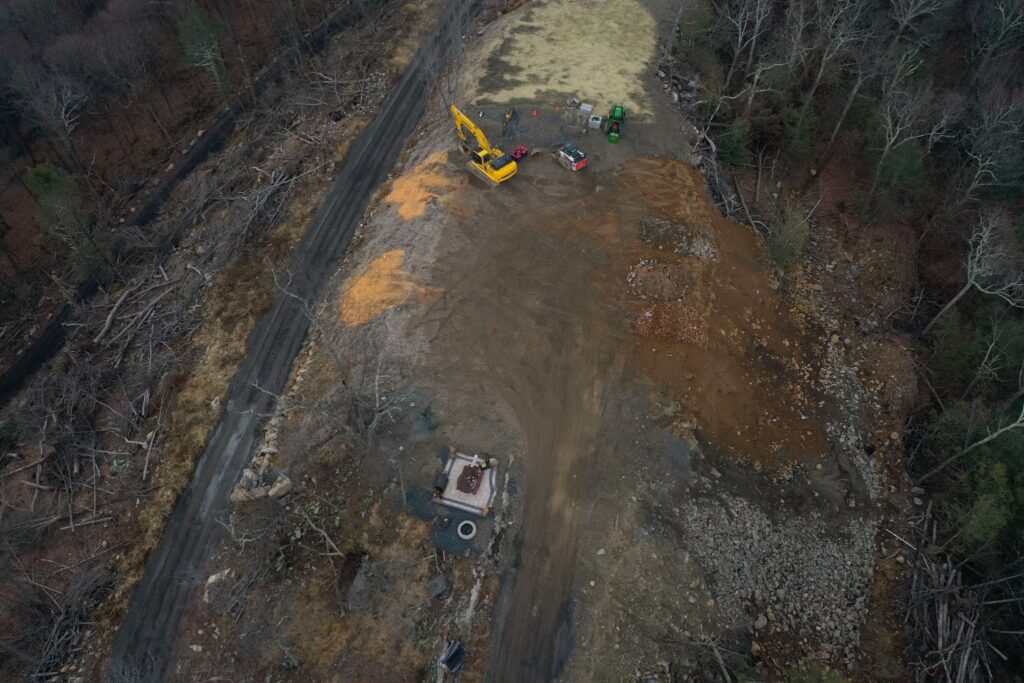
Residents also raised concerns that portions of the ridgeline had been cleared and regraded before final approvals were issued, actions that appeared inconsistent with Town Code requirements. The lack of enforcement in this case drew public opposition and scrutiny in light of prior code enforcement actions taken against other property owners.
Project Details and Decision
Santini’s proposal called for a 27-foot-tall residence on Mount Zion Road at a site elevation of approximately 1,007.5 feet. With the structure included, the total elevation would have reached 1,034.5 feet, exceeding the highest ridgeline elevation on the parcel, according to findings by the Town Engineer and Code Enforcement Officer.
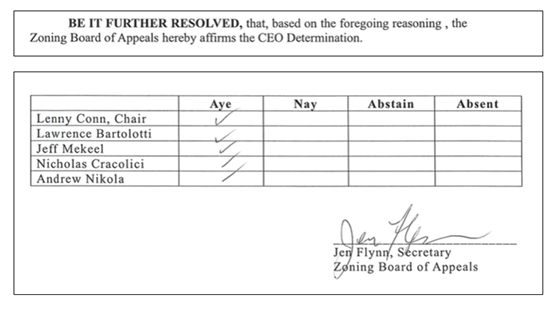
While technical in tone, the ZBA’s decision carried sweeping implications. The Board rejected an interpretation that would have allowed a structure to be measured against the highest point along the entire Marlborough ridgeline, more than six miles long, rather than the ridgeline segment affecting the property itself. Adopting that approach, the Board wrote, would “contradict the legislative purpose, undermine ridgeline protection, nullify the siting and visibility provisions, and lead to unreasonable and unintended results.” (ZBA Minutes, p. 32).
In affirming that determination, the Town’s position has been clarified after more than a year of public hearings and county review. The ZBA emphasized statutory context; the phrase “highest elevation of the Marlborough ridgeline, as viewed from the east,” the Board concluded, refers to the mapped ridgeline segment affecting the property, not a distant, higher peak elsewhere in town.
The Board also traced legislative intent, noting that Local Law No. 3 of 2024 was adopted after multiple public hearings and was expressly intended to ensure that “no structure will extend above the ridgeline,” while still allowing limited development opportunities below it.
Planning, Public & County Response
In late 2023, the Town Board proposed amendments to §155-41.1, describing them as clarifications to ambiguous language, including how the long-standing 50-foot elevation buffer should be measured.
At a March 25, 2024 meeting, Town Supervisor Scott Corcoran said, “Basically, we wanted to give more flexibility in the code,” while maintaining that concerns about runoff and environmental harm were misplaced because those issues were addressed elsewhere in the Town Code.
The proposed amendments drew opposition from residents, the Town Planning Board, and the Ulster County Planning Board.
At the January 2024 Town Board meeting, Planning Board member Cindy Lanzetta urged caution and time:
More time needs to be taken to examine the ridgeline protection law, how it came to be crafted – and how it can be crafted going forward,” Lanzetta said. “I would suggest you keep [the public hearing] open longer rather than putting something in place that doesn’t work.
Lanzetta reminded the Board that the ridgeline law was adopted in conformance with Marlborough’s Comprehensive Master Plan and state planning requirements—not as a discretionary overlay to be easily adjusted. The Comprehensive Plan itself identifies ridgelines as defining visual horizons and recommends that “any new construction on hillsides should occur below the tops of ridges such that structures do not appear on the horizon.”
At the same meeting, property owners Kerry Santini and Gary Lazaroff voiced their concern that the law was unfair to property owners, leaving them with “residual land” that is unbuildable.
By August 26, 2024, objections were no longer procedural but structural. At a Town Board workshop meeting that night, resident Maribeth Wooldridge-King submitted a written statement and requested it be included verbatim in the public record. (Town Board Minutes, 8-24-2024)
She wrote:
You are well aware of the objections that have been brought to your attention many times over the course of the several public hearings, namely the failure to include in the revised resolution oversight of the Town’s Planning Board or the Zoning Board of Appeals… Your expressed desire for transparency and ‘to do what’s best for Marlborough’ is jeopardized by your actions on this measure.
Residents also took to social media, creating the Facebook group “Save Marlborough Ridge” in January of 2024, where they shared Town Board and ZBA notices to encourage public opposition and involvement.
On May 1, 2024, the Ulster County Planning Board disapproved the proposed amendment, concluding that it weakened ridgeline protections and reduced oversight by shifting interpretive authority to the Code Enforcement Officer and Town Engineer. The Town Board did not override that decision.
Closing the Loop
Seen in isolation, the January 8 Santini denial might appear to be a routine zoning decision. Read against the prior year’s record, it may be the final stitch in a long-contested seam.
By applying the law as written, the ZBA reinforced the ridgeline standard adopted in the Town’s Comprehensive Plan and upheld through county review. In doing so, it answered the central question underlying the controversy: whether Marlborough’s ridgeline law was meant to bend.
Santini has the opportunity to appeal the decision by initiating what is called an Article 78 action. It remains to be seen whether he will exercise that right.
Leave a Reply